

Every September, National Suicide Prevention Month asks us to pause and talk openly about a topic many people find difficult to bring up: suicide, and the pain that leads someone to consider it. September is also National Recovery Month, a parallel observance recognizing that people living with substance use disorders can and do recover. My Psychiatrist believes these two months belong together, because mental health struggles and substance use often overlap, and both deserve the same compassionate, evidence-based response.
This guide walks through what National Suicide Prevention Month means, the warning signs that matter most, what World Suicide Prevention Day represents, how substance use and recovery fit into the picture, and where to find real support, for yourself or someone you love. None of this replaces a conversation with a licensed provider, but it’s a starting point for understanding what help actually looks like, and for recognizing that support is closer than it may feel.
TABLE OF CONTENTS
- Why September Matters: Two Observances, One Message
- Recognizing the Warning Signs
- World Suicide Prevention Day: A Global Moment for Hope
- Understanding Substance Use and the Path to Recovery
- How Treatment Offers a Path Forward
- Supporting Someone You Love
- Frequently Asked Questions
Why September Matters: Two Observances, One Message
National Suicide Prevention Month is observed every September to encourage open conversation about suicide risk, reduce the stigma that keeps people from asking for help, and point people toward real resources. It sits alongside National Recovery Month, which SAMHSA (the Substance Abuse and Mental Health Services Administration) recognizes each September to highlight that recovery from substance use disorder is possible and that treatment works.
The two observances aren’t a coincidence of the calendar. Suicide risk and substance use are frequently connected, substance use can heighten risk during a crisis, and unresolved mental health struggles are a common driver of substance use in the first place. Talking about them in the same breath isn’t about linking every case; it’s about recognizing that the same compassionate, professional support applies to both, and that no one has to sort out which “category” they fall into before reaching out.
Whatever brought you to this page. Concern for yourself, a loved one, or simply wanting to understand National Suicide Prevention Month better, the rest of this guide is written to be a practical starting point, not a diagnostic tool.

Recognizing the Warning Signs
Suicide warning signs aren’t always dramatic, and they don’t look the same in every person. According to the National Institute of Mental Health, signs worth taking seriously include:
- Talking about wanting to die, feeling like a burden, or having no reason to live
- Increased use of alcohol or drugs
- Withdrawing from friends, family, or activities they used to enjoy
- Extreme mood swings, or a sudden sense of calm after a period of depression
- Giving away possessions, saying goodbye, or getting affairs in order
- Sleeping too much or too little, or expressing feelings of hopelessness and being trapped
Increased substance use is one of the most common warning signs above, and it often overlaps with a diagnosable substance use disorder rather than a separate, unrelated issue. If that sounds familiar, our substance abuse treatment page walks through what treatment can actually look like.
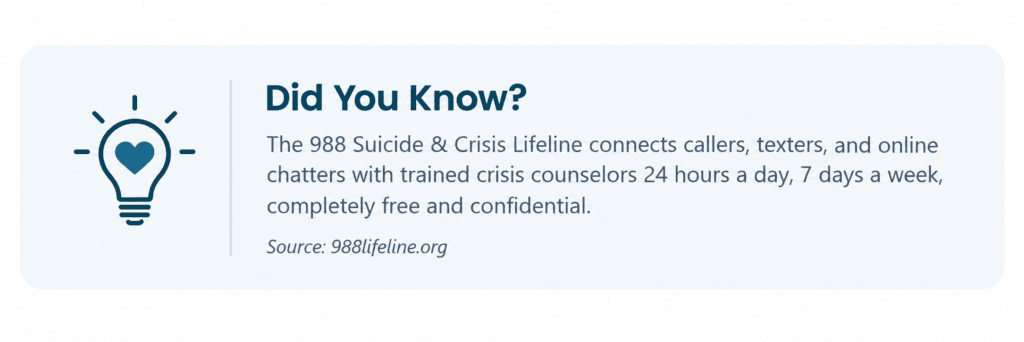
If you notice these signs in yourself or someone else, treat them as reason to act, not to wait and see. The 988 Suicide & Crisis Lifeline is available 24/7 by call, text, or chat, and connects you with a trained crisis counselor at no cost.
Recognizing a warning sign isn’t the same as diagnosing a crisis, it’s permission to ask a direct, caring question and to help someone connect with a professional who can assess what’s actually going on.
World Suicide Prevention Day: A Global Moment for Hope
September 10 marks World Suicide Prevention Day, a day recognized internationally to raise awareness, share prevention resources, and remember those affected by suicide. It falls within National Suicide Prevention Month and is often the day communities hold walks, vigils, and educational events.
For families and providers, World Suicide Prevention Day is a useful, low pressure moment to check in on people who may be struggling quietly. A coworker who’s seemed distant, a family member going through a hard year, a friend who’s been unusually quiet online. A simple, direct question (“How are you really doing?”) can open a door that someone didn’t know how to open themselves.
Understanding Substance Use and the Path to Recovery
National Recovery Month exists to make one message clear: recovery from substance use disorder is possible, and treatment works. If you’re not sure whether what you or a loved one is experiencing rises to the level of a substance use disorder, our guide to understanding substance use disorder (SUD) walks through what SUD actually is, separate from stereotypes or moral judgment.
Substance use and mental health are frequently connected, which is part of why National Suicide Prevention Month and National Recovery Month share a month. That doesn’t mean everyone struggling with one is struggling with the other, but it does mean that a good care team asks about both, rather than treating them as unrelated.
My Psychiatrist’s substance abuse treatment services include options across the care spectrum, from outpatient therapy to more structured programs, built around the idea that recovery is a process, not a single event, and that early intervention makes a real difference.
How Treatment Offers a Path Forward
Evidence-informed treatment for both suicide risk and substance use disorder typically draws on a combination of approaches: individual therapy, medication management when appropriate, and for substance use, structured outpatient or group programs that meet people where they are. No treatment can guarantee a specific outcome, but consistent, professional care meaningfully changes the odds.
For people who haven’t found enough relief through medication and therapy alone, it helps to know that additional options exist. TMS therapy is one example of a treatment path for depression that hasn’t responded to standard care, and it’s a conversation worth having with a psychiatric provider.
What treatment looks like varies by person. Some people need a single conversation with a psychiatric provider to feel less alone and get pointed toward the right resources; others benefit from ongoing therapy, medication, or a structured recovery program. The starting point is the same either way: an honest conversation with a licensed provider who can assess what’s actually needed.

Supporting Someone You Love
If you’re worried about a family member, partner, or friend, you don’t need to have the perfect words, you need to show up and stay present. A few things that genuinely help:
- Ask directly. Asking “are you thinking about suicide?” does not plant the idea, research consistently shows the opposite is true.
- Listen without rushing to fix it. Sometimes the most helpful thing is simply not looking away.
- Avoid judgment about substance use. Shame tends to push people further from help, not toward it.
- Help them find professional support, and offer to be part of that first step, making the call together, or sitting with them during a first appointment.
- Take care of yourself too. Supporting someone through a crisis or a recovery process is real work, and you’re allowed to need support of your own.
Reaching out for professional help for yourself or someone else isn’t a failure. It’s the same responsible step you’d take for any other serious health concern.
Frequently Asked Questions
When is National Suicide Prevention Month?
National Suicide Prevention Month is observed every September in the United States, alongside World Suicide Prevention Day on September 10.
What is National Recovery Month?
National Recovery Month is a September observance recognized by SAMHSA to raise awareness that recovery from substance use disorder is achievable and that treatment and support services work.
What are the warning signs of suicide?
Warning signs include talking about wanting to die or being a burden, increased substance use, withdrawing from others, extreme mood changes, giving away possessions, and expressing hopelessness. If you notice these signs, take them seriously and help the person connect with support.
What should I do if someone shows warning signs?
Ask directly and calmly whether they’re thinking about suicide, listen without judgment, and help them reach a professional resource, such as the 988 Suicide & Crisis Lifeline or a psychiatric provider. Avoid leaving them alone if you believe they’re in immediate danger.
Are mental health struggles and substance use disorder related?
They can be, though not always. The two conditions frequently occur together, which is part of why a thorough evaluation looks at both rather than assuming one explains the other.
Ready to Talk to Someone?
If you or someone you love is struggling, reaching out is an important first step. Our care team can help you explore treatment options based on your individual needs.
If you or someone else is in immediate danger, call 911. For immediate crisis support, call or text 988.