

Borderline Personality Disorder (BPD) is a complex mental health condition that impacts the way individuals think and feel about themselves and others. This can lead to challenges in everyday functioning, relationships, and emotional regulation. Understanding the signs of BPD is a crucial step toward recognizing when it may be time to seek professional support.
What Is Borderline Personality Disorder?
BPD is characterized by a pervasive pattern of instability in moods, self-image, behavior, and relationships. These symptoms can lead to impulsive actions and problems in relationships. Many people with BPD experience intense episodes of anger, depression, and anxiety that may last from a few hours to days. BPD is characterized by a pervasive pattern of instability in moods, self-image, behavior, and relationships.
These symptoms can lead to impulsive actions and problems in relationships. Relationships are typically very intense and unstable, shifting rapidly between feelings of idealization and devaluation. Signs of BPD also include chronic feelings of emptiness, inappropriate or intense anger, and periods of stress-related paranoia or feeling disconnected from reality, known as dissociation. Impulsive and risky behaviors such as binge eating, spending sprees, substance misuse, or self-harm are common signs of BPD as well, often occurring in response to emotional distress or fears of rejection. The severity, frequency, and combination of symptoms vary from person to person, but these patterns can make daily life and relationships especially challenging.
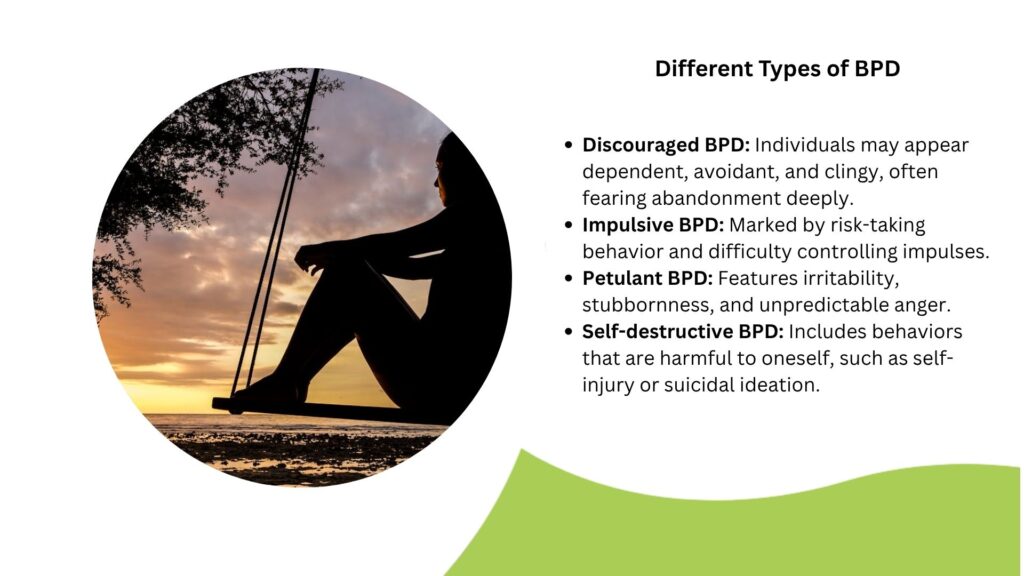
Different Types of BPD
Though not formally categorized into subtypes in diagnostic manuals, mental health professionals often recognize different presentations of Borderline Personality Disorder, which will portray different signs of BPD to look for, such as:
- Discouraged BPD: Individuals may appear dependent, avoidant, and clingy, often fearing abandonment deeply.
- Impulsive BPD: Marked by risk-taking behavior and difficulty controlling impulses.
- Petulant BPD: Features irritability, stubbornness, and unpredictable anger.
- Self-destructive BPD: Includes behaviors that are harmful to oneself, such as self-injury or suicidal ideation.
Understanding these subtypes can help in tailoring more effective treatment plans and ensuring any signs or symptoms an individual with BPD is facing are addressed, even those they may not associate with their Borderline Personality Disorder without a professional recognizing them.
Common Signs of BPD
Intense fear of abandonment, whether real or imagined: Individuals with BPD may go to great lengths to avoid perceived or actual separation or rejection. This fear can lead to frantic efforts to keep others close and may cause significant distress even in minor or imagined threats of abandonment.
Unstable relationships that alternate between idealization and devaluation: Relationships can be intense and short-lived. A person with signs of BPD might idealize someone one moment and then abruptly shift to viewing them as cruel or uncaring.
Distorted and unstable self-image or sense of identity: People with BPD often have an inconsistent view of themselves. Their self-identity may shift rapidly, affecting their values, goals, and aspirations.
Impulsive behaviors (e.g., spending sprees, unsafe sex, substance abuse): These impulsive actions constitute one of the significant signs of BPD and often occur in response to emotional distress and can lead to serious consequences. Impulsivity may also appear in binge eating, reckless driving, or quitting jobs suddenly.
Recurrent suicidal behavior or self-harming actions: This may include suicidal threats, gestures, or actual attempts, as well as self-injury like cutting or burning. These behaviors often occur in response to emotional pain or rejection, and are one of the most dangerous signs of BPD that should be given attention immediately.
Emotional instability, often due to a marked reactivity of mood: Mood swings are typically intense and short-term, lasting a few hours to a few days. Emotions may shift quickly from happiness to irritability, anxiety, or despair.
Chronic feelings of emptiness: A persistent sense of inner void or hollowness that doesn’t go away, even when life appears to be going well externally.
Inappropriate, intense anger or difficulty controlling anger: This might include frequent outbursts, sarcasm, bitterness, or physical fights. One of the signs of BPD is that anger seems disproportionate to the situation.
Transient, stress-related paranoia or dissociation: Under stress, individuals with BPD may feel suspicious of others or lose touch with reality, experiencing dissociation such as feeling spaced out, numb, or detached from themselves.
Ready to Take the Next Step?
If you or a loved one is experiencing signs of BPD or struggles with anxiety, you don’t have to navigate it alone. At My Psychiatrist, our experienced team offers compassionate, evidence-based care tailored to your needs. Contact us today to schedule an appointment at one of our six South and Central Florida locations. We are here to help support you.
BPD FAQs
Is BPD the same as bipolar disorder? No, BPD and bipolar disorder are different conditions. While both involve mood instability, BPD is primarily related to emotional regulation and interpersonal difficulties, whereas bipolar disorder involves distinct episodes of mania and depression.
Can BPD be cured? There is no “cure” for BPD, but many individuals see significant improvement with therapy, medication, and support. Never be afraid that there is nothing you can do, many individuals lead completely normal lives when they receive support for mental health!
What therapies are effective for BPD? Dialectical Behavior Therapy (DBT) and Cognitive Behavioral Therapy (CBT) are commonly used and shown to be effective.
Can someone with BPD live a normal life? Yes. With appropriate treatment and support, many people with BPD lead fulfilling, stable lives and can manage their symptoms very well.
How is Borderline Personality Disorder diagnosed? A qualified mental health professional will assess signs of BPD, your symptoms, history, and functioning through interviews and standardized tools.
What medications help with BPD? While there is no medication specifically for BPD itself, symptoms and signs of BPD, like depression and anxiety, may be managed with antidepressants, mood stabilizers, or antipsychotics.
Does everyone with BPD self-harm? Not necessarily. While self-harm is common, it is not a universal symptom, not all individuals with BPD will self-harm.
How can I support someone with signs of BPD? Offer consistent emotional support, encourage treatment, and educate yourself about the condition. Patience and empathy are key in supporting a loved one with Borderline Personality Disorder.
Sources:
National Institute of Mental Health (NIMH) – Borderline Personality Disorder
https://www.nimh.nih.gov/health/topics/borderline-personality-disorder
Mayo Clinic – Borderline Personality Disorder https://www.mayoclinic.org/diseases-conditions/borderline-personality-disorder/symptoms-causes/syc-20370237
Cleveland Clinic – Borderline Personality Disorder (BPD)
https://my.clevelandclinic.org/health/diseases/9762-borderline-personality-disorder-bpd
MedlinePlus – Borderline Personality Disorder
https://medlineplus.gov/ency/article/000935.htm