

Borderline personality disorder vs bipolar disorder can be difficult to tell apart because both can involve intense mood changes, impulsive behavior, and periods of emotional distress. Still, they are different mental health conditions with important differences in how symptoms develop, how long mood changes last, and whether mania or hypomania is present.
Borderline personality disorder (BPD) commonly involves difficulty regulating emotions, changes in self-image, and challenging relationship patterns. Bipolar disorder, on the other hand, is characterized by distinct mood episodes that can include mania, hypomania, and depression. Looking at the broader pattern over time is often more useful than focusing on one symptom alone.
Below, we compare BPD vs bipolar disorder side by side, explain why the conditions are sometimes confused, and explore how mental health professionals evaluate the differences.
BPD vs Bipolar at a Glance
BPD and bipolar disorder can share certain symptoms, but the overall pattern of those symptoms can be quite different. This side-by-side comparison highlights some of the key distinctions that mental health professionals may consider during an evaluation.
Why Are BPD and Bipolar Disorder Often Confused?
BPD and bipolar disorder can be difficult to distinguish because they share some symptoms, including intense mood changes, impulsive behavior, emotional distress, and difficulties that can affect relationships or daily life. Looking at one symptom by itself may not provide enough information to distinguish between the two conditions.
The key difference often becomes clearer when mental health professionals look at the broader pattern. With BPD, emotional changes may occur quickly and can be strongly connected to interpersonal experiences, stress, or perceived rejection. Bipolar disorder is characterized by more distinct mood episodes that involve sustained changes in mood, energy, activity, and behavior.
Impulsivity can also occur in both conditions. However, in bipolar disorder it may be especially noticeable during manic or hypomanic episodes, while in BPD it can appear as part of a broader, ongoing pattern of emotional and behavioral instability. Because of this overlap, diagnosis typically involves looking at how symptoms develop and change over time rather than relying on a single sign.
Key Differences: Borderline Personality Disorder vs Bipolar
Although BPD and bipolar disorder can share certain symptoms, the differences become clearer when looking at how mood changes occur, how long they last, what tends to trigger them, and whether mania or hypomania is present.
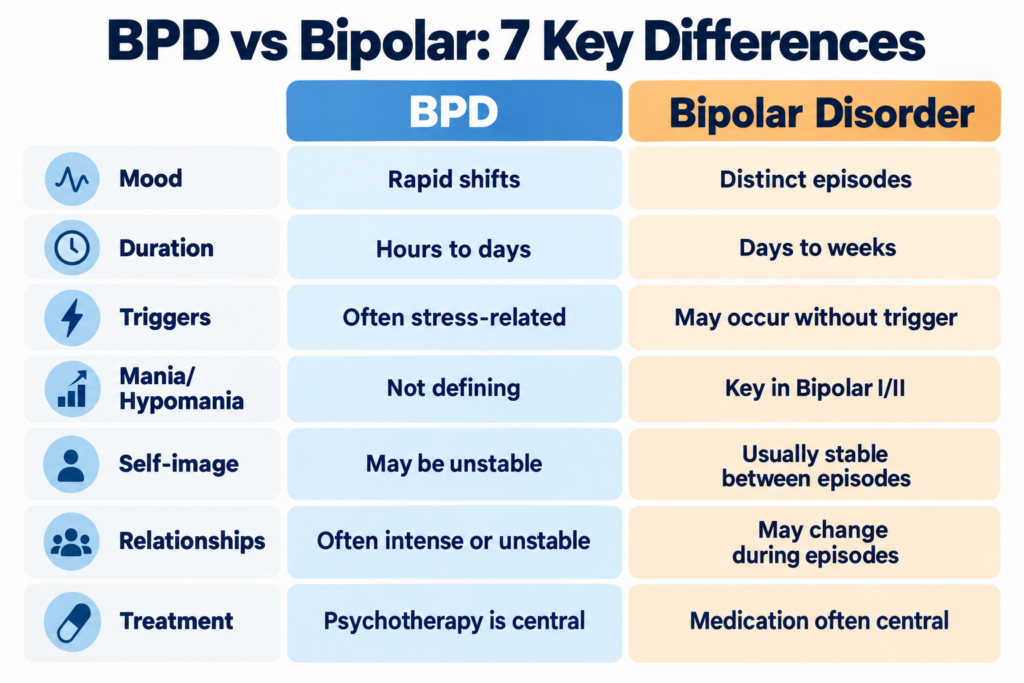
1. Mood Changes Follow Different Patterns
One of the clearest differences between BPD and bipolar disorder is the way mood changes tend to occur. In BPD, emotions may shift quickly and can be strongly influenced by interpersonal experiences, conflict, stress, or perceived rejection.
Bipolar disorder follows a different pattern. Mood changes occur as more defined episodes that can involve significant shifts in energy, activity, sleep, judgment, and behavior. These episodes may include mania, hypomania, depression, or a combination of symptoms.
This difference in pattern is one reason mental health professionals look beyond individual symptoms and consider how a person’s mood changes develop over time.
2. How Long Do Mood Changes Last?
Bipolar mood episodes also have specific duration criteria. A manic episode generally lasts at least seven days, or any duration when hospitalization is necessary. A hypomanic episode lasts at least four consecutive days, while a major depressive episode generally lasts at least two weeks. Episodes can continue longer than these minimum timeframes. Duration is one part of a diagnosis, but it is not enough by itself to determine which condition a person has.
3. Triggers and Emotional Reactivity
Another difference between BPD and bipolar disorder involves what tends to precede emotional changes. In BPD, intense emotional reactions are often connected to interpersonal stress, conflict, perceived rejection, or fears of abandonment. These reactions can develop quickly and may feel overwhelming in the moment.
Bipolar mood episodes may develop without an obvious trigger, but stress, disrupted sleep, and substance use can also contribute to their onset. Having a trigger does not rule out bipolar disorder. Clinicians consider whether the reaction is part of a sustained episode involving changes in mood, energy, activity, and sleep.
Triggers are only one part of the picture, but understanding whether mood changes are primarily reactive to events or occur as part of a more sustained episode can help clinicians evaluate the overall pattern.
4. Mania and Hypomania Are Important Differences
Mania and hypomania are among the most important differences between bipolar disorder and BPD. In bipolar disorder, manic and hypomanic episodes involve unusually elevated, energized, or irritable mood accompanied by noticeable changes in activity and behavior. These episodes may also involve a decreased need for sleep, racing thoughts, rapid speech, increased confidence, or impulsive decisions.
Bipolar I disorder is defined by the presence of at least one manic episode. Bipolar II disorder involves both hypomanic and major depressive episodes, without a history of a manic episode. Although hypomania is less severe than mania, bipolar II disorder can still have a significant impact, particularly when depressive episodes occur.
Mania is more severe and can significantly interfere with daily functioning. Hypomania involves a noticeable change from a person’s usual mood, energy, and activity, but it does not cause the marked impairment or psychotic symptoms associated with mania.
This distinction is especially important during diagnosis because impulsivity or intense emotions can occur in both conditions. Mental health professionals look at whether those symptoms occur as part of a manic or hypomanic episode and how they fit into the person’s overall history.
5. Self-Image
Self-image can be an important part of understanding borderline personality disorder and bipolar disorder. With BPD, a person may experience an unstable or changing sense of self, including shifts in how they see themselves, their identity, or their goals.
Bipolar disorder can also affect how a person sees themselves, particularly during manic, hypomanic, or depressive episodes. However, changes in self-perception are not a defining feature of bipolar disorder in the same way that persistent identity disturbance can be associated with BPD.
Because changes in self-image can occur for many reasons, clinicians consider this information alongside the person’s broader history and other symptoms.
6. Relationship Patterns
Relationship patterns can also provide important context when distinguishing BPD from bipolar disorder. With BPD, relationships may be particularly intense or unstable, with strong changes in how a person perceives themselves or others. Sensitivity to rejection or fears of abandonment may also contribute to emotional reactions within relationships.
Bipolar disorder can affect relationships as well, particularly during manic, hypomanic, or depressive episodes. However, relationship difficulties in bipolar disorder are generally considered in the context of the person’s mood episodes rather than as a defining, ongoing pattern.
Relationship difficulties alone cannot determine a diagnosis. Mental health professionals consider whether these patterns are persistent, when they occur, and how they relate to other symptoms.
7. Impulsive Behavior Can Occur in Both
Impulsive behavior can appear in both BPD and bipolar disorder, which is one reason the conditions may be confused. Examples can include risky spending, substance use, unsafe driving, sudden decisions, or other behaviors that feel difficult to control.
In bipolar disorder, impulsivity may become more noticeable during manic or hypomanic episodes, when changes in energy, confidence, judgment, and activity are also present. With BPD, impulsive behavior may occur as part of a broader pattern of emotional instability and reactions to stress or interpersonal situations.
This is why impulsivity alone is not enough to distinguish between the two conditions. Mental health professionals consider when the behavior occurs, what seems to trigger it, what other symptoms are present, and how the pattern changes over time.
Can Someone Have Both BPD and Bipolar Disorder?
Yes. A person can have both borderline personality disorder and bipolar disorder. The conditions are separate diagnoses, but they can occur together, which can make evaluation more complex.
When both are present, a mental health professional looks closely at how symptoms relate to one another. For example, they may consider whether impulsive behavior or intense emotions are part of a longer-standing pattern, whether they occur mainly during manic or hypomanic episodes, or whether both patterns are present.
This is another reason diagnosis should not be based on one symptom alone. A careful evaluation considers symptom history, duration, triggers, changes in sleep and energy, relationship patterns, and how symptoms affect daily functioning over time.
Identifying whether one condition, the other, or both are present can help guide a treatment plan that addresses the person’s specific needs.
How Do Psychiatrists Tell BPD and Bipolar Disorder Apart?

Understanding the difference between BPD and bipolar disorder usually requires looking at the full pattern of symptoms over time. A mental health professional may ask when symptoms began, how long mood changes typically last, what tends to trigger them, and whether there have been clear manic or hypomanic episodes.
Sleep and energy changes can also provide important context. Bipolar mood episodes often involve noticeable changes in energy, activity, sleep, judgment, or behavior that last for days or longer. With BPD, clinicians may look more closely at patterns involving emotional reactivity, relationships, self-image, impulsivity, and sensitivity to rejection or abandonment.
A decreased need for sleep can also provide important context. Someone experiencing this symptom may sleep substantially less than usual while still feeling rested or energized. This is different from insomnia, in which a person has difficulty sleeping and may feel tired afterward. Clinicians consider this alongside other symptoms rather than using it alone to make a diagnosis.
A psychiatric evaluation may also include personal and family mental health history, current medications, substance use, medical conditions, and other factors that could contribute to similar symptoms. In some cases, a physical exam or medical testing may be used to rule out other possible causes.
There is no single symptom that confirms one diagnosis over the other. The overall history, timing, severity, and pattern of symptoms are what help clinicians determine whether BPD, bipolar disorder, both conditions, or another explanation best fits what a person is experiencing.
Does Treatment Differ for BPD and Bipolar Disorder?
Yes. Treatment can differ significantly because BPD and bipolar disorder are different conditions, even when some symptoms overlap.
For borderline personality disorder, structured, evidence-based psychotherapy is the primary treatment. Dialectical behavior therapy (DBT) is one established approach, although other structured therapies can also be effective. Medication may sometimes be used as an adjunct to psychotherapy to address specific symptoms or co-occurring conditions, but it is not a replacement for psychotherapy.
A longer-standing pattern does not mean symptoms are permanent. With appropriate treatment, people with BPD can experience meaningful improvement in symptoms, relationships, and daily functioning.
For bipolar disorder treatment, medication is generally a central part of treatment, often combined with psychotherapy. Treatment aims to manage current symptoms, reduce the risk of future episodes, and support daily functioning.
Because treatment strategies can differ, getting the diagnosis right matters. A mental health professional can help determine which symptoms are present, how they fit together, and what treatment approach may be most appropriate.
When to Talk With a Mental Health Professional
Consider talking with a mental health professional if mood changes, impulsive behavior, relationship difficulties, or changes in sleep and energy are affecting daily life. It can also be helpful to seek an evaluation if symptoms seem to follow different patterns over time or if you are unsure whether they may be related to BPD, bipolar disorder, or another condition.
A professional evaluation can help clarify what is happening by looking at the full history of symptoms rather than relying on one sign or one difficult period. This is especially important when there may be symptoms of mania or hypomania, recurring depression, significant emotional instability, or concerns about an existing diagnosis.
If you have concerns about your mental health, a psychiatrist or other qualified mental health professional can help you understand the next steps and discuss treatment options that fit your needs.
Frequently Asked Questions
Is BPD Worse Than Bipolar Disorder?
Neither BPD nor bipolar disorder is inherently worse than the other. Both conditions can vary in severity and may affect relationships, work, daily functioning, and overall quality of life.
The impact depends on the symptoms a person experiences, how severe they are, whether other conditions are present, and how well treatment is working. Rather than focusing on which condition is worse, it is more useful to identify the symptoms and patterns involved so the right treatment approach can be considered.
Can BPD Be Mistaken for Bipolar Disorder?
Yes. BPD can sometimes be mistaken for bipolar disorder because both conditions may involve intense emotions, impulsive behavior, and changes in mood. The difference often becomes clearer when clinicians look at the timing, duration, triggers, and overall pattern of symptoms.
Bipolar disorder involves distinct mood episodes, including mania or hypomania, while BPD is more often associated with rapid emotional shifts, interpersonal sensitivity, and longer-standing patterns in relationships and self-image. A professional evaluation helps separate overlapping symptoms and determine which diagnosis best fits the full history.
Can You Have BPD and Bipolar Disorder at the Same Time?
Yes. A person can meet criteria for both borderline personality disorder and bipolar disorder. Because some symptoms can overlap, having both conditions can make diagnosis and treatment planning more complex.
Clinicians look at the full pattern of symptoms, including whether there are distinct manic or hypomanic episodes, how emotional changes relate to stress or relationships, how long symptoms last, and whether certain patterns are present over time. Identifying both conditions when they are present can help guide a more appropriate treatment plan.
Borderline Personality Disorder vs Bipolar: What Is the Biggest Difference?
One of the biggest differences is the pattern and duration of mood changes. Bipolar disorder involves distinct mood episodes, including mania or hypomania, that can last for days or longer and are accompanied by changes in energy, sleep, activity, and behavior.
With BPD, emotional shifts are often more rapid and may be closely connected to interpersonal stress, perceived rejection, or other triggering situations. Clinicians consider these patterns, along with the person’s full history, when distinguishing between the two conditions.
Are BPD Mood Swings the Same as Bipolar Mood Swings?
No. Mood changes associated with BPD and bipolar disorder can sometimes look similar, but they usually follow different patterns. In BPD, emotional shifts may happen quickly and are often linked to interpersonal stress, conflict, or perceived rejection.
Bipolar mood changes occur as more distinct episodes involving changes in mood, energy, activity, sleep, and behavior. These episodes may include mania, hypomania, or depression and generally last longer than the rapid emotional shifts often associated with BPD.
Understanding the Difference Is the First Step
Understanding borderline personality disorder vs bipolar starts with recognizing that the two conditions can share certain symptoms but have different patterns, triggers, and treatment considerations. Looking at the full picture, including mood duration, emotional reactivity, sleep, energy, relationships, and the presence of mania or hypomania, can help clarify the differences.
If you are unsure which symptoms best fit what you are experiencing, a psychiatric evaluation can provide more context and help determine the most appropriate next steps.