

Talking about depression can feel uncomfortable, especially if you are not sure how to describe what you have been experiencing. You may know that something feels different but have trouble finding the right words, or you may wonder whether what you are feeling is something you should bring up with a healthcare professional.
You do not need to have everything figured out before starting the conversation. If changes in your mood, energy, sleep, motivation, concentration, or daily routine are concerning you, sharing what you have noticed can give your doctor important information about what may be going on.
Learning how to talk to your doctor about depression can help you feel more prepared for that conversation. A little planning beforehand can make it easier to explain what you have been experiencing, ask questions, and understand what next steps may be appropriate for you.
How to Prepare Before Talking to Your Doctor About Depression
You do not need to prepare a perfect explanation of how you feel. It can help, however, to think about a few details before your appointment so you do not have to remember everything in the moment.
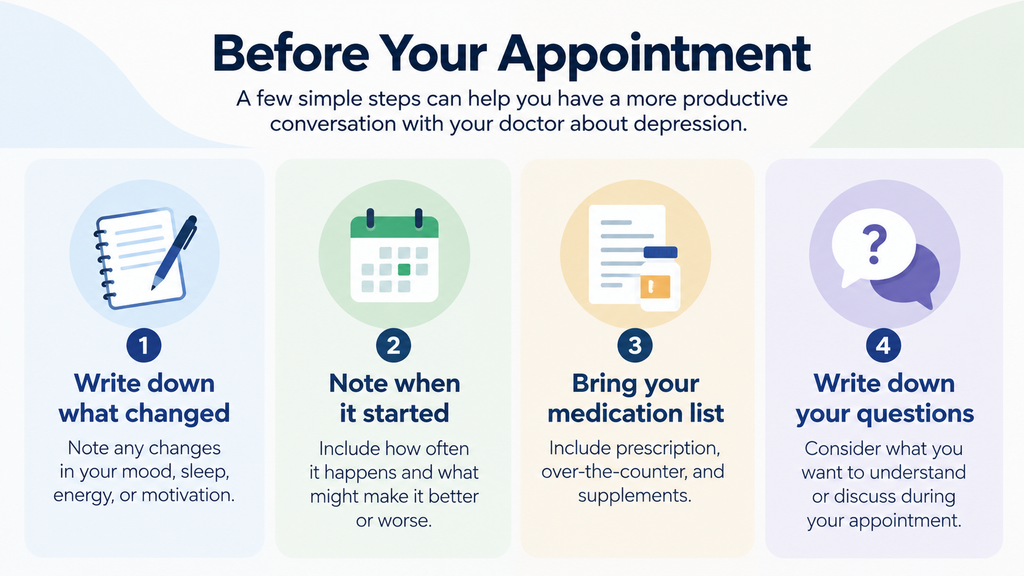
Write Down What You Have Been Noticing
Before your visit, consider making a few notes about what has changed, when you first noticed it, and how it has been affecting your daily life. You might include changes in mood, sleep, energy, concentration, appetite, motivation, or interest in activities.
You do not need to decide whether these changes are symptoms of depression. Simply note when they began, how often they occur, and how they affect your usual activities. A few specific examples can make it easier to explain what you have been experiencing.
Make a List of Your Medications
Bring an up-to-date list of prescription medications, over-the-counter medications, vitamins, supplements, and herbal products you use.
This information matters because your healthcare provider may consider your overall health, medications, and other medical factors when discussing changes in mood or behavior. NIMH and MedlinePlus both recommend having a complete medication list available for healthcare visits.
Write Down Your Questions
It is easy to forget questions once an appointment begins. Writing them down ahead of time can help make sure you discuss the things that matter most to you.
You might want to ask:
- Could something other than depression be contributing to how I feel?
- What additional evaluation might be helpful?
- What treatment options may be appropriate for me?
- Would speaking with a psychiatrist or therapist be helpful?
- What changes should I pay attention to before my next appointment?
You do not need to ask every question on the list. Think of it as a reminder of the topics you want to understand better.
How to Talk to Your Doctor About Depression: What to Say
Starting the conversation is often the hardest part. You do not need to use clinical language or know exactly what is causing the way you feel. A simple, honest description of what has been changing can be enough to begin.
A Simple Way To Start
“I’m not sure if this is depression, but I’ve noticed some changes in how I’ve been feeling and I’d like to talk about them.”
You might start with something like:
- “I haven’t been feeling like myself lately.”
- “I’ve noticed changes in my mood and energy.”
- “I’ve been having a harder time enjoying things I normally care about.”
- “My sleep and motivation have changed, and it’s starting to affect my daily routine.”
- “I’m not sure if this is depression, but I’m concerned about how I’ve been feeling.”
The goal is not to find the perfect words. The goal is to give your doctor a clear picture of what you have been experiencing.
Be Specific About What Has Changed
It can be helpful to describe concrete changes instead of saying only that you have been feeling “bad” or “down.”
For example, you might explain:
- how your sleep has changed
- whether your energy level feels different
- whether it is harder to concentrate
- whether your appetite has changed
- whether you have lost interest in activities you usually enjoy
- whether work, school, relationships, or daily responsibilities feel more difficult
Specific examples can help your doctor better understand how the changes are affecting your everyday life.
Share How Long You Have Felt This Way
Your doctor may also ask when you first noticed the changes and whether they have been constant or come and go.
You do not need to remember an exact date. Even a general timeline can be helpful.
You might say:
“I started noticing this a few weeks ago.”
or:
“I’ve felt this way on and off for several months, but recently it has been more noticeable.”
Being as specific as you can about timing, frequency, and impact can help your healthcare provider better understand what you are experiencing.
Be Honest, Even If Something Feels Difficult to Explain
Tell your doctor if you have had thoughts of death, suicide, or harming yourself, even if you have not acted on them. You do not need to wait for your doctor to ask. Sharing these thoughts helps your doctor understand what support you need.
Some parts of the conversation may feel personal or uncomfortable. It is still important to be as open as you can about how you have been feeling.
Your doctor may ask questions about your mood, sleep, stress, medical history, medications, and how your daily life has been affected. These questions are intended to help build a more complete picture of your health.
If you are unsure how to answer something, it is okay to say that too.
You can say:
“I’m not sure how to describe it, but I know something feels different.”
That is still useful information.
You Do Not Need to Diagnose Yourself
You do not need to walk into the appointment and say, “I have depression.”
It is completely appropriate to say:
“I’m concerned that what I’m experiencing could be depression, and I’d like to talk about it.”
Your role is to describe what you have noticed. Your healthcare provider can help evaluate what may be contributing to those changes and discuss what next steps may make sense.
What Information Is Helpful to Share With Your Doctor
A conversation about depression usually involves more than one symptom or feeling. Your doctor may want to understand what has changed, how long it has been happening, and whether other health factors could be contributing.
Mention alcohol, cannabis, or other substances you use, including how often you use them. It may also help to share any family history of mental health conditions and major recent changes, such as a loss, relationship difficulties, or increased stress.
You do not need to arrive with a complete medical history memorized. A few key pieces of information can help make the conversation more productive.
Changes in Your Mood and Daily Routine
Describe the changes you have noticed and how they are affecting everyday life. Specific examples involving work, school, relationships, responsibilities, sleep, energy, or activities you normally enjoy can give your doctor useful context.
When the Changes Began
Your doctor may want to understand the timeline.
Think about:
- when you first noticed something felt different
- whether the changes developed gradually or suddenly
- whether they are present most days or only occasionally
- whether anything seemed to happen around the time they began
- whether you have experienced similar periods before
You do not need an exact date. Even a general estimate can provide useful context.
Your Current Medications and Supplements
Bring a list of medications you are currently taking, including prescription medications, over-the-counter products, vitamins, and supplements.
It can also be helpful to mention any recent medication changes.
Your doctor may consider your medications along with your symptoms and overall health when evaluating what could be contributing to how you feel.
Your Medical and Mental Health History
Also mention any past periods when you felt unusually energized or irritable, needed much less sleep, or acted more impulsively than usual. These experiences can help your doctor evaluate your symptoms and choose an appropriate treatment plan.
Your doctor may ask about other health conditions, previous mental health concerns, past treatment, or similar experiences.
Share what you know, but do not worry if you cannot remember every detail.
If you have previously received mental health treatment, you may want to mention:
- previous diagnoses
- therapy or counseling
- medications you have taken
- treatments you found helpful
- treatments you stopped and why
This information can help your doctor understand the broader context of your health.
Questions Your Doctor May Ask About Depression
Your doctor may ask questions to better understand what you have been experiencing, how long it has been happening, and how much it is affecting your everyday life.
They may also ask about your overall health, medications, mental health history, and any recent changes that could provide additional context.
Your Doctor May Ask How Daily Life Has Been Affected
It can be helpful to think beyond how you feel emotionally.
Your doctor may want to know whether the changes you have noticed are affecting areas such as:
- work or school
- relationships
- household responsibilities
- social activities
- exercise or hobbies
- sleep routines
- your ability to complete everyday tasks
You do not need to give a complicated explanation. A specific example can often communicate the impact clearly.
For example:
“I can still get through work, but it takes much more effort than it used to.”
or:
“I’ve been turning down plans because I don’t have the energy or motivation to go.”
Your Doctor May Ask About Your Overall Health
Some medical conditions and medications can cause symptoms that resemble depression. Because of this, your doctor may ask about other health conditions, recent physical changes, or medications you are taking. In some cases, a physical exam or laboratory testing may be considered to help rule out other possible causes.
It Is Okay If You Do Not Know Every Answer
You are not expected to arrive with a diagnosis or a perfect timeline.
If you are unsure, it is okay to say:
“I’m not sure exactly when it started, but I know I’ve felt different for the past couple of months.”
The purpose of these questions is to help your healthcare provider understand the overall picture, not to test whether you can describe everything perfectly.

Questions You May Want to Ask Your Doctor About Depression
Talking with your doctor is also an opportunity to ask questions and better understand what may be happening.
You do not need to ask everything at once. Choose the questions that feel most relevant to what you have been experiencing.
Questions to Bring With You
- Could something else be contributing to the way I feel?
- Do my symptoms suggest that further evaluation may be helpful?
- What treatment options are available?
- Would it be helpful for me to speak with a psychiatrist or therapist?
- When should I schedule a follow-up?
Ask About Your Options
If your doctor believes additional care may be appropriate, ask what options are available and why a particular approach may be recommended.
Depending on the individual, depression care may involve psychotherapy, medication, psychiatric care, lifestyle changes, or other treatment approaches.
You might ask:
“What options would you recommend based on what I’ve told you?”
or:
“What are the benefits and considerations of the different options available to me?”
This can help make the conversation more collaborative and give you a clearer understanding of what may come next.
Ask What to Expect Next
Before the appointment ends, it can be helpful to understand the next step.
Questions may include:
- Do I need another appointment?
- Should I see a mental health specialist?
- Is there anything I should keep track of between visits?
- Who should I contact if I have additional questions?
- When should we review how I am doing?
Knowing what happens next can make it easier to follow through after the appointment.
Ask for Clarification When You Need It
Healthcare conversations can include unfamiliar terms or a lot of information at once.
If something is unclear, it is okay to ask your doctor to explain it differently.
You might say:
“Can you explain what that means in simpler terms?”
or:
“Could you go over the next steps again?”
Understanding your care is an important part of participating in decisions about your health.
What May Happen After You Talk to Your Doctor About Depression
What happens next will depend on what you share, your health history, and your individual needs. There is no single next step that applies to everyone.
Your doctor may recommend additional evaluation, discuss treatment options, suggest follow-up, or refer you to a mental health professional if more specialized care would be helpful.
You May Be Asked to Complete a Depression Screening
Some healthcare providers use a questionnaire or screening tool to better understand symptoms and how much they are affecting daily life.
A screening result is only one part of the overall evaluation. Your healthcare provider may also consider your symptoms, medical history, medications, physical health, and other factors before discussing next steps. MedlinePlus notes that depression screening can be followed by a more detailed mental health evaluation or other testing when appropriate. MedlinePlus
Your Doctor May Discuss Treatment Options
If depression is diagnosed, treatment is individualized. Common approaches include psychotherapy, medication, or a combination of both. Other options may be considered depending on the person’s needs, preferences, medical situation, and response to care. National Institute of Mental Health
This is a good time to ask questions such as:
- What options might make sense for me?
- What are the benefits and considerations of each option?
- How soon should we follow up?
- How will we evaluate whether the plan is helping?
- Should I see a psychiatrist, therapist, or another mental health professional?
You May Be Referred to a Mental Health Professional
A primary care doctor may recommend that you speak with a psychiatrist, therapist, or another mental health professional for further evaluation or treatment.
A referral does not necessarily mean that your situation is severe. It may simply mean that a provider with additional mental health expertise can help evaluate your needs or discuss additional treatment options.
Follow-Up May Be Part of the Process
Depression care may involve more than one visit. Your healthcare provider may want to follow up to see how you are doing, review any changes, or adjust the plan when appropriate.
The important thing is to leave the conversation understanding what comes next and who you should contact if you have additional questions.
When It May Help to Speak With a Psychiatrist About Depression
A psychiatrist is a medical doctor who specializes in mental health. Depending on your needs, speaking with a psychiatrist may be helpful when a more specialized mental health evaluation is recommended or when medication may be part of the conversation.
You may also be referred to a psychiatrist if your symptoms are having a significant impact on daily life, if your healthcare provider wants additional input, or if you have questions about treatment options that require psychiatric expertise.
What a Psychiatrist Can Help With
A psychiatrist may help with:
- evaluating symptoms and mental health history
- reviewing current and past medications
- discussing possible diagnoses
- considering whether medication may be appropriate
- monitoring medication when it is prescribed
- coordinating care with other mental health professionals when needed
Not everyone who talks to a doctor about depression will need to see a psychiatrist. The appropriate next step depends on the individual.
Psychiatrist or Therapist?
Psychiatrists and therapists can both help treat depression, and their roles may overlap. Psychiatrists are medical doctors who can evaluate mental and physical health factors, prescribe medication, and provide psychotherapy. Licensed therapists, including psychologists, clinical social workers, and mental health counselors, generally focus on psychotherapy.
Some people benefit from one provider, while others work with a combination of professionals.
Getting Help With Depression Through My Psychiatrist
If you are concerned about depression, My Psychiatrist can help you explore appropriate next steps based on your individual needs.
Our team provides access to a range of mental health services across Florida, including psychiatric evaluations, medication management, talk therapy, psychological testing, TMS Therapy, and Spravato for eligible patients.
Start With the Type of Care That Fits Your Needs
Not everyone needs the same type of mental health care.
Depending on your situation, the next step may involve:
- meeting with a psychiatric provider
- exploring therapy
- discussing medication management
- completing additional evaluation
- learning about other treatment options when appropriate
The goal is to help connect you with a provider or service that fits your needs, rather than assuming one approach is right for everyone.
In-Person and Telemedicine Options
My Psychiatrist offers in-person care at multiple Florida locations, along with telemedicine options for many services.
Availability may vary by provider, location, service, and insurance plan.
Find a Provider
If you are ready to speak with a mental health professional, you can explore My Psychiatrist providers and available care options.
Learn more about depression care at My Psychiatrist
Frequently Asked Questions
How do I tell my doctor I think I may have depression?
You do not need to arrive with a diagnosis. You can start by describing what has changed and how it has been affecting your daily life.
For example:
“I haven’t been feeling like myself lately, and I’m concerned about some changes in my mood, energy, and motivation.”
Being specific about when the changes began, how often they happen, and how they affect your routine can help your doctor understand what you are experiencing.
Can I talk to my primary care doctor about depression?
Yes. A primary care doctor can be an appropriate place to start a conversation about depression.
They may ask questions about your symptoms, medical history, medications, and overall health. Depending on your needs, they may discuss treatment options, recommend follow-up, or refer you to a mental health professional.
What should I bring to an appointment about depression?
It may be helpful to bring:
• a list of your current medications and supplements
• notes about changes you have noticed
• a general timeline of when those changes began
• relevant medical or mental health history
• questions you want to ask
You do not need to prepare everything perfectly. The goal is simply to make it easier to share the information you think is important.
What questions should I ask my doctor about depression?
Questions may include:
• Could something else be contributing to how I feel?
• Would additional evaluation be helpful?
• What treatment options are available?
• Should I speak with a psychiatrist or therapist?
• What should I monitor between appointments?
• When should I follow up?
Choose the questions that feel most relevant to your situation.
Should I see a psychiatrist for depression?
A psychiatrist may be helpful when specialized mental health evaluation or medication management is appropriate.
The right type of provider depends on your individual needs. Some people may work with a psychiatrist, therapist, primary care doctor, or a combination of professionals.
If you are not sure where to start, your healthcare provider can help you understand your options.
Starting the Conversation Is an Important Step
Learning how to talk to your doctor about depression does not mean you need to have the right diagnosis or know exactly what to say.
Start with what you have noticed.
Explain what feels different, how long it has been happening, and how it is affecting your everyday life. From there, your healthcare provider can help you better understand what may be going on and what next steps may be appropriate.
If you would like to explore mental health care through My Psychiatrist, you can learn more about our providers and services across Florida.